Becoming a Project Manager in 2026: Skills, Sectors and Salaries
Ten sectors with indicative Australian salary ranges, the skills that matter now AI has absorbed the admin, and a practical pathway into the role.

A project manager leads the planning, coordinates the team and carries responsibility for delivery. The role runs from first idea to final handover, taking in scope definition, resourcing, realistic scheduling and the communication strategy that holds everyone together.
Day to day, that means managing deadlines, tracking progress, reporting status, controlling budgets, approving invoices and confirming quality before anything is signed off. Strip it back and the job is simple to describe and hard to do. You turn ambiguity into delivered outcomes.
How the Role Has Changed
The shape of the work has shifted noticeably. AI tools now absorb much of the administrative overhead, including scheduling updates, status reporting and early risk detection, which frees project managers to spend more time on stakeholder alignment, strategic decisions and coaching teams that sit across several functions.
Hybrid and distributed teams are the default rather than the exception, so the coordination problem has changed as well. Alongside traditional planning skills, sustainability awareness, data literacy and AI fluency are now treated as core competencies rather than nice extras.
The Skills That Matter Now
- Strategic thinking and business acumen, so you can connect a project to the outcome it is meant to produce
- Stakeholder management and executive communication, including the ability to deliver bad news early and clearly
- AI fluency, covering prompt design, evaluating machine generated plans and knowing when to override them
- Data literacy and comfort working from live analytics dashboards rather than month old spreadsheets
- Agile, predictive and hybrid delivery frameworks, plus the judgement to pick the right one
- Risk management across cyber, supply chain and climate related exposure
- Change management and coaching, because adoption decides whether a delivered project creates value
- Sustainability and environmental, social and governance aware delivery
- Emotional intelligence for leading distributed and multicultural teams
- Financial literacy across budgeting, forecasting and value realisation
The Fundamentals Still Do the Heavy Lifting
Tooling changes quickly. The discipline underneath it does not. Whatever software you use, the same foundations separate projects that land from projects that drift.
Start with a clear scope baseline and a work breakdown structure that decomposes the project into deliverables small enough to estimate honestly. Build the schedule from those packages, identify the critical path, and know which tasks have float and which do not. When someone asks whether a two week delay matters, the critical path is how you answer in seconds rather than days.
Track cost against progress, not against the calendar. Earned value techniques exist for exactly this reason, because a project that has spent half its budget is not necessarily half finished. Keep a live register of risks, assumptions, issues and dependencies, review it in every status meeting, and assign an owner and a date to each entry rather than letting it become a list nobody reads.
Finally, run a real change control process. Scope creep rarely arrives as one large request. It arrives as a series of small favours nobody documented, which is why every approved change needs a recorded impact on time, cost and quality before work starts.
Choosing a Delivery Approach
Predictive delivery suits work where the requirements are stable and the sequence is physically constrained. Construction and infrastructure sit naturally here, because you cannot iterate your way through a concrete pour.
Agile suits work where requirements are expected to evolve and value can be released incrementally, which is why software and product teams adopted it first. Hybrid approaches, now the most common arrangement in large organisations, apply predictive control at the program level while running agile delivery inside individual workstreams.
The mistake is treating the choice as an identity rather than a decision. Pick the approach that fits the uncertainty in front of you, and be willing to run different approaches in different parts of the same program.
Where Project Managers Work, and What They Earn
The figures below are indicative Australian annual ranges for experienced project managers. Treat them as a guide only, because actual pay varies with project scale, location, sector, contract type and the level of technical depth a role demands.
Construction
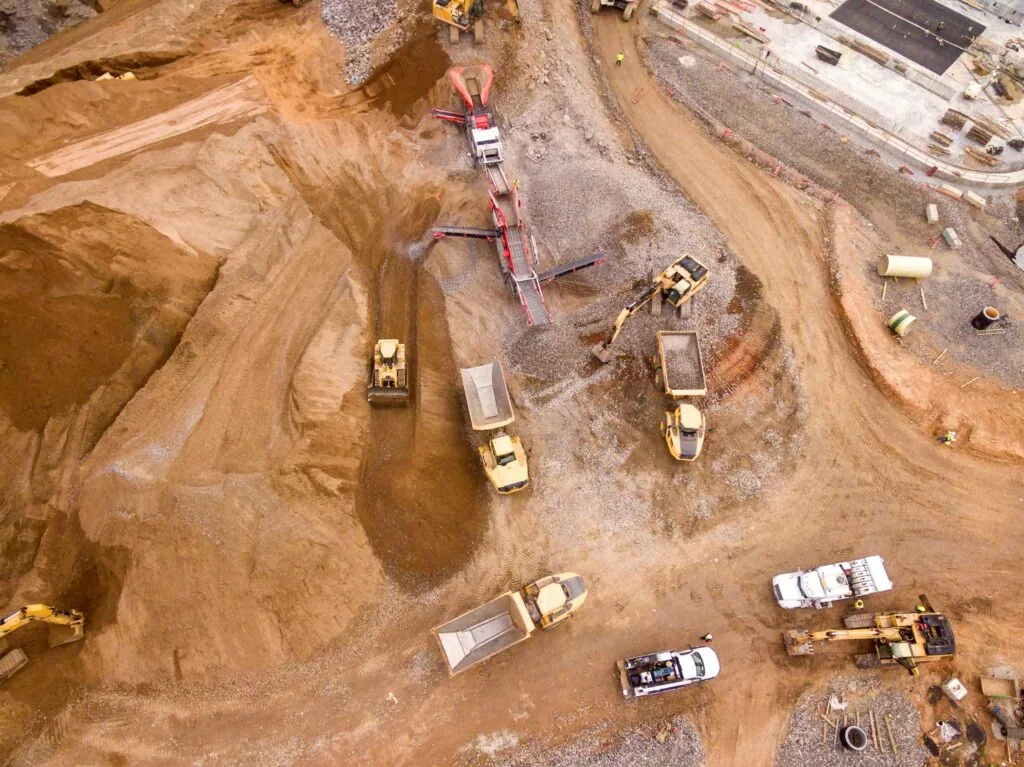
Rising material costs, tighter regulatory requirements and a sustained infrastructure pipeline across transport, housing and renewables keep construction one of the most demanding and most valuable sectors for project managers. You coordinate architects, engineers, planners, public works officials and site crews across residential, commercial and industrial work. The remit runs from budget formulation and scheduling through daily site management, with quality management, contract administration and risk management central throughout. Digital twins, scheduling integrated with building information modelling, and modular construction are now standard tools.
Indicative range: $140,000 to $165,000
Engineering
Engineering project work spans mechanical, civil, industrial, aerospace, chemical, biomedical, electrical, nuclear, agricultural and marine disciplines. A degree in the relevant field, often at postgraduate level, combined with project management credentials is the usual expectation. Demand is particularly strong in renewables, defence, semiconductors and critical minerals processing.
Indicative range: $145,000 to $190,000
Information Technology
IT covers software, hardware, cloud and internet services, with projects ranging from application development and platform migrations to network infrastructure, cybersecurity and enterprise AI rollouts. You need enough technical fluency to challenge estimates and enough business judgement to plan, cost and prioritise. Experience delivering machine learning projects and overseeing cybersecurity risk commands a clear premium.
Indicative range: $150,000 to $180,000
Finance and Insurance
Finance touches every sector, but the industry itself needs specialist project managers to deliver regulatory and technology change. The focus tends to be narrower and more quantitative, built around cash flow projections, earned value management, operational plans and measurable business metrics.
Many project managers in this sector also drive revenue initiatives and work directly with senior executives, so financial reporting sits at the centre of the role. Large insurers hire similar profiles for high stakes programs that demand technical detail and disciplined risk management. Open banking, digital assets and AI driven underwriting are the biggest current sources of change.
Indicative range: $145,000 to $175,000
Healthcare
Compliance and cost remain the two dominant pressures, and both respond well to capable project management. Hospitals, large clinics, medical device manufacturers and pharmaceutical companies all rely on project managers for patient facing applications and telehealth portals, new departments and facility expansions, and electronic medical records upgrades and interoperability programs. Domain knowledge matters here, so a background in health management, public health or a related discipline is highly valued.
Indicative range: $135,000 to $150,000
Marketing
Marketing project managers keep campaigns on strategy, on schedule and on budget, working across designers, copywriters, content producers, digital specialists, advertisers and external agencies. A degree in marketing, communications, public relations or business administration alongside project management knowledge is typical. AI assisted content workflows and continuous personalisation programs are reshaping how this work is planned.
Indicative range: $115,000 to $145,000
Manufacturing
Manufacturing leans heavily on budget management, with accurate estimates for labour and productivity underpinning business development. Vendor and supplier relationships, production process improvement and rigorous attention to hazards and safety all form part of the job. Reshoring, industrial automation and the shift to lower emission production have made the role more strategic.
Indicative range: $160,000 to $175,000
Legal
Legal project managers run the process side of legal service delivery, covering budgets, timing and resource allocation for litigation and transactional teams. A law degree helps but is not essential, and project management certification strengthens a candidacy considerably. Demand has grown as firms standardise their delivery models and adopt legal technology.
Indicative range: $90,000 to $110,000
Consulting
Consulting project managers are engaged by firms or contracted directly to clients. They identify improvement opportunities, deliver actionable recommendations and draw on breadth of experience across many engagements. Most hold a postgraduate management qualification alongside project management credentials.
Indicative range: $145,000 to $165,000
Energy and Utilities
Energy and utilities remain a growth sector, driven by the energy transition, grid modernisation and pressure to reduce emissions. Solar, wind, storage, hydrogen and grid scale battery projects generate significant demand alongside continued transition work in oil and gas.
Agile delivery experience, the ability to coordinate multidisciplinary technical teams and clear communication of goals are all essential. Large scale risk management matters more here than almost anywhere else, because outages caused by disaster, delay or unforeseen events affect entire communities.
Indicative range: $180,000 to $200,000
Others Worth Mentioning
- Education and educational technology, covering personalised learning rollouts, roughly $110,000 to $130,000
- Government and public sector, covering digital transformation and policy programs, roughly $130,000 to $160,000
- Defence and space, covering sovereign capability programs, roughly $150,000 to $190,000
- Not for profit and non government organisations, covering mission driven delivery, roughly $95,000 to $120,000
Project Management Software in 2026
Project management platforms have advanced substantially. AI assistants, predictive scheduling and automated risk detection are baseline features now rather than premium additions. The better platforms let teams plan, track and deliver work while surfacing issues and forecasting outcomes automatically.
Common capabilities include real time progress tracking with generated status summaries, self reporting by team members, automated portfolio views across workstreams, predictive analytics on schedule slippage and budget burn, reporting against the original baseline, and integrated budget and resource monitoring.
The Main Platforms
- Asana. Strong workflow automation and tooling for building custom AI agents, excellent goal and portfolio management, and powerful reporting and workload views. Well suited to marketing, operations and cross functional teams.
- Monday.com. Highly visual boards, timelines and dashboards, built in AI for task drafting and summarisation, integrated customer and development modules, and automations that reduce manual updating.
- ClickUp. An all in one platform covering tasks, documents, whiteboards and chat, with AI assisted planning and status writing and highly customisable Gantt, Kanban, timeline and workload views. Strong value for small and mid sized teams.
- Microsoft Planner and Project. Deeply integrated with Microsoft 365 and Teams, with Copilot generating plans, drafting updates and answering questions about project data. The natural fit for enterprises already standardised on Microsoft.
- Smartsheet. A spreadsheet style interface with enterprise grade governance, strong resource management, workflow automation and reporting. Popular in construction, engineering and professional services.
Choose the platform your organisation will actually maintain. A simple tool kept current beats a sophisticated one that nobody updates after week three.
AI in Project Management
AI is embedded in daily project work now rather than sitting on the horizon. Assistants draft status reports, suggest risk mitigations, redraw schedules when scope changes and surface early warning signals from delivery data. Models forecast likely completion dates, and natural language interfaces let stakeholders query project data directly instead of waiting for the weekly pack.
The effect on the role is clear. Project managers spend far less time assembling administration and far more time on the human side of delivery, including alignment, coaching, conflict resolution and the judgement calls that software cannot make.
The key shifts are worth naming. Status reporting is largely automated, so you review and add context rather than build reports from scratch. Risk detection draws on meeting notes, chat and delivery metrics. Scenario planning and rebaselining that once took days now takes minutes. And ethics, AI governance and data quality oversight have become explicit parts of the job, because a forecast is only as good as the data feeding it.
Common Mistakes to Avoid
- Accepting a deadline before the scope is defined. Estimating backwards from a date someone else chose is how projects fail before they begin.
- Confusing activity with progress. Percentage complete means very little without a defined completion criterion for each deliverable.
- Managing stakeholders only when you need something. Map them early, understand their influence and interest, and keep the relationship warm.
- Trusting an AI generated plan without checking the assumptions behind it. The output looks confident whether or not the inputs were sound.
- Letting the risk register go stale. A register reviewed once at kickoff is documentation, not risk management.
- Skipping the lessons learned review because the team has already moved on. The next project pays for that shortcut.
Getting Started
A practical pathway into the role looks like this.
- Build foundational knowledge through recognised training. A nationally recognised Certificate IV or Diploma of Project Management suits people building from practical experience, while credentials such as PMP, PRINCE2 or an established agile certification are widely requested in corporate roles.
- Add focused learning on AI in delivery, since most major bodies and providers now offer short programs in this area.
- Get hands on by leading small projects or workstreams before chasing a full project manager title. Coordinating a genuine piece of work teaches more than any course.
- Develop domain expertise in an industry you actually enjoy. A construction project manager and a fintech project manager share a discipline but very little of their daily reality.
- Invest in the human skills. Communication, negotiation, coaching and executive presence are what separate project managers in an AI assisted workplace.
Project management in 2026 is more strategic, more data driven and more human than it has ever been. The administrative load has shrunk and the leadership expectations have grown. For anyone who enjoys turning ambiguity into delivered outcomes, it remains one of the most rewarding careers available.
About Techskill Academy
Techskill Academy (RTO 45055) delivers nationally recognised project management qualifications 100 percent online, built to fit around full time work. To talk through which level suits your experience, call 1300 089 979 for a free consultation.
Ready to upskill?
Map a pathway that fits where you want to go next.