



In 2026, Australia’s building and construction industry remains a cornerstone of the national economy. For tradies and industry professionals planning their next career move, 2026 presents a unique landscape of both high-stakes challenges and significant opportunities.
Looking back: 2025 – Growth Amidst Pressure
In 2025, construction activity expanded across the board. Engineering work grew by over 6% year‑on‑year, while building work rose by around 2%. This momentum was largely fueled by government-backed housing initiatives, transport infrastructure and renewable energy projects. (Reference: Yahoo Finance)
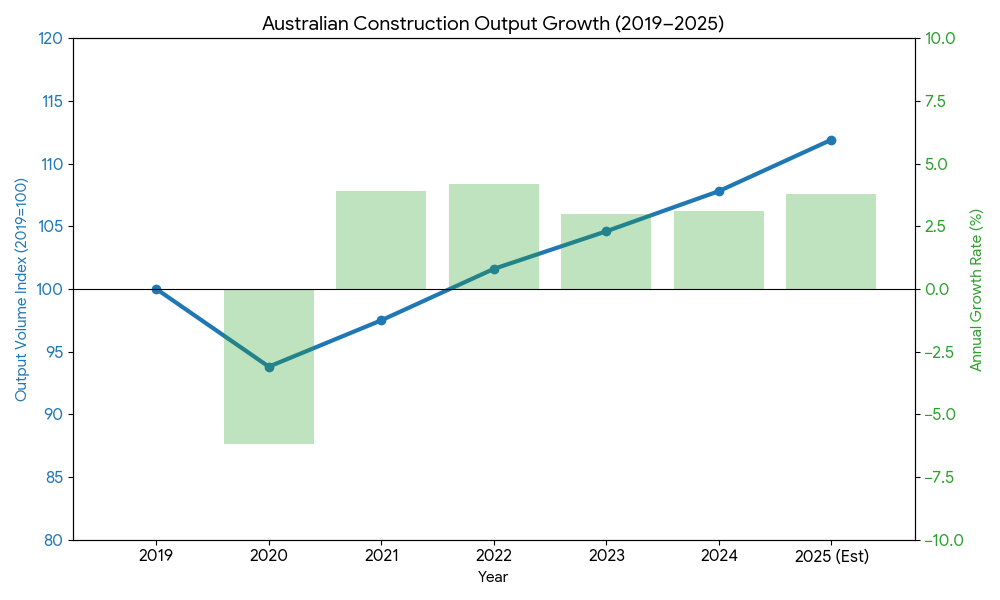
The graph above illustrates the ‘V-shaped’ recovery following the 2020 pandemic dip. It shows how the industry surpassed pre-pandemic levels to achieve record output volumes by the end of 2025.
However, this growth came with “growing pains”. The industry faced:
- Escalating Costs: Rising material and operational expenses
- Company insolvencies: A sharp increase in business failures due to fixed-price contracts and thin margins
- Approval volatility: Fluctuating residential approvals created a mixed picture for new dwelling starts across different states
The 2026 Forecast: Steady Expansion
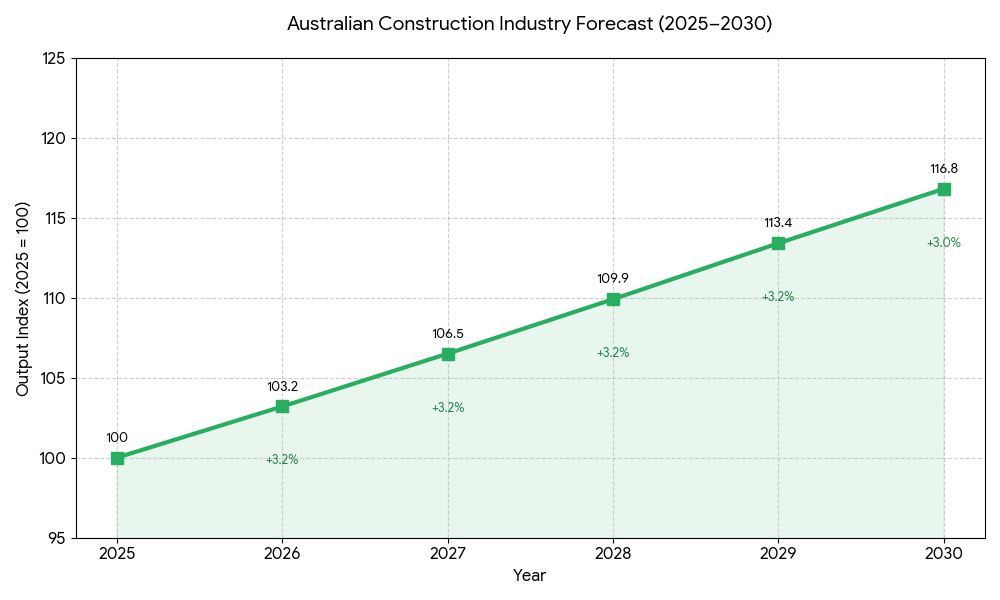
Forecasts suggest the sector will stabilise and grow at an average annual rate of 3% to 3.2% between 2026 and 2029. This growth is underpinned by a robust pipeline of energy, transport, and public facility projects that will keep demand for skilled workers high for the remainder of the decade. (Reference: GlobeNewswire , consultaustralia.com.au)
State-by-state Context: Where Activity is Strong
Australia’s construction picture isn’t uniform – different states are experiencing unique dynamics:
- Queensland is set for major activity, including preparations for the 2032 Olympics, with reports suggesting a potential shortfall of tens of thousands of construction workers around 2026–27 if demand outpaces supply. (Reference: The Australian)
- New South Wales continues to see robust approvals and major urban projects, especially in residential developments. (Reference: News.com.au)
- Victoria’s rapid population growth has raised housing demand and broader construction needs, especially for new homes and urban infrastructure. (Reference: Herald Sun)
- Western Australia and South Australia are also showing growth in dwelling activity and infrastructure work, supported by population and economic trends. (Reference: Australian Bureau of Statistics)
The Changing Labour Market: Opportunities and Gaps
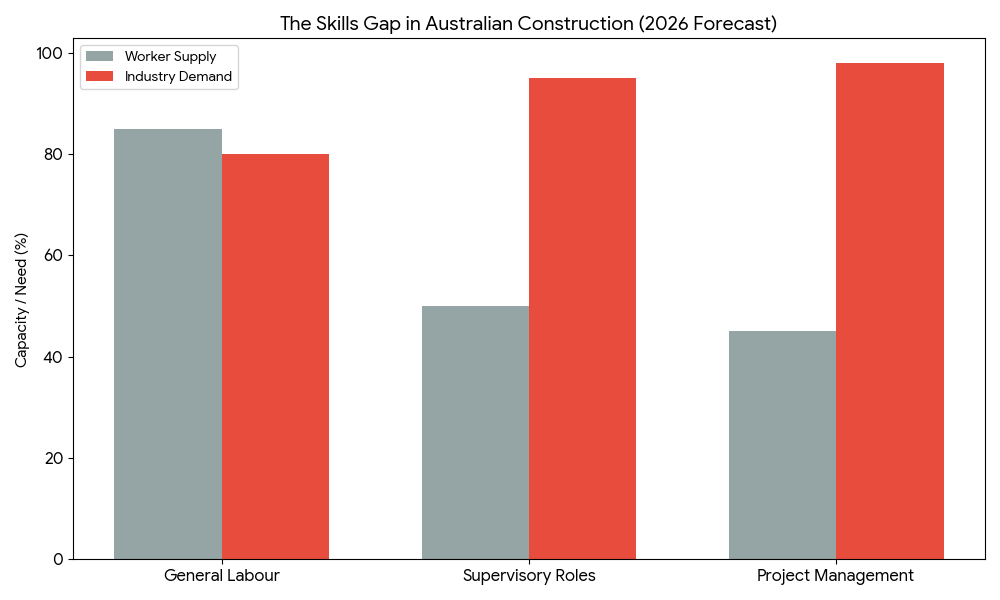
The construction workforce accounted for over 1.3 million positions in 2024–25 – roughly 9% of all Australian jobs. Despite this, a critical gap remains. Employers are reporting ongoing shortages of skilled workers, not just in general labour, but particularly in supervisory, management and specialist roles. (Reference: amca.com.au)
What these trends mean on the Ground?
Across both metropolitan and regional markets, several themes are shaping the industry’s trajectory:
- Project pipelines remain strong, but workforce capacity lags behind demand.
- Costs and delivery pressures persist, especially where skilled labour and experienced supervisors are in short supply.
- State‑level dynamics (like population growth and major infrastructure plans) influence where work is happening and what skills are most needed.
Together, these trends suggest that the industry in 2026 will reward people who can combine practical experience with broader capability – including project coordination, compliance understanding and leadership skills.
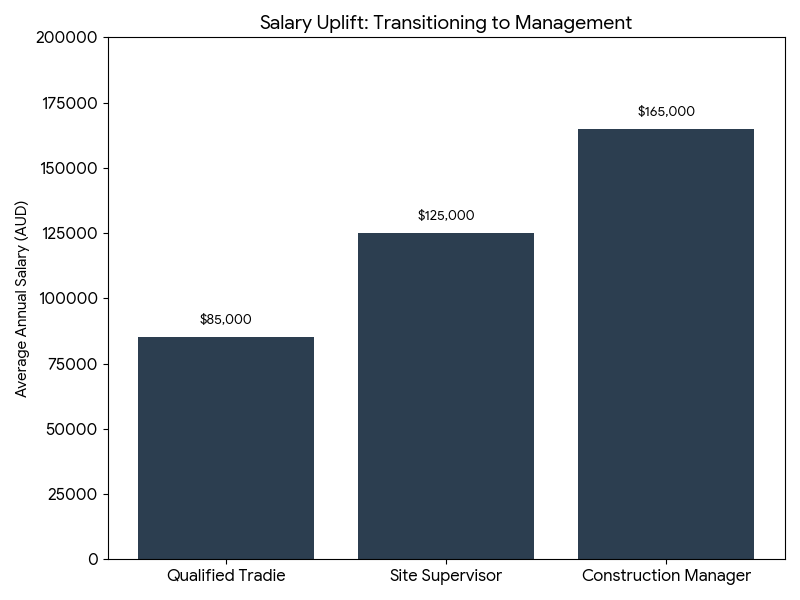
For experienced tradespeople, this gap is an open door. In 2026, the industry will increasingly reward those who can combine practical “on-site” experience with:
- Project Coordination: Managing timelines and resources effectively.
- Compliance Knowledge: Navigating stricter building codes and WHS standards.
- Leadership: Moving into roles like Site Supervisor, Project Manager, or Licensed Builder.
Moving into these roles typically results in higher income potential, reduced physical wear and tear, and greater long-term career stability.
The Rise of the “Qualified Professional”
In 2026, experience alone is no longer the sole currency of the industry. Licensing bodies, insurers, and tier-one contractors now demand formal proof of competency. We are seeing an industry-wide shift toward mandatory qualifications, such as the Certificate IV in Building and Construction or the Diploma of Building and Construction.
Formalising your skills is no longer just about getting a piece of paper; it’s about:
- Career Longevity: Transitioning into management roles that are less physically demanding.
- Risk Mitigation: Ensuring you are protected against compliance and safety liabilities.
- Licensing: Meeting the strict requirements for builder registration.
Final Thoughts: Why 2026 is Your Year?
The Australian construction industry in 2026 is currently a “seller’s market” for those with the right credentials. With investment in residential and infrastructure projects remaining strong, the demand for licensed and qualified professionals will consistently outstrip supply.
If you are an experienced tradie or construction professional, 2026 is the ideal time to formalise your experience through Recognition of Prior Learning (RPL) or further study. By stepping off the tools and into a leadership role, you aren’t just changing your job – you’re future-proofing your career.