


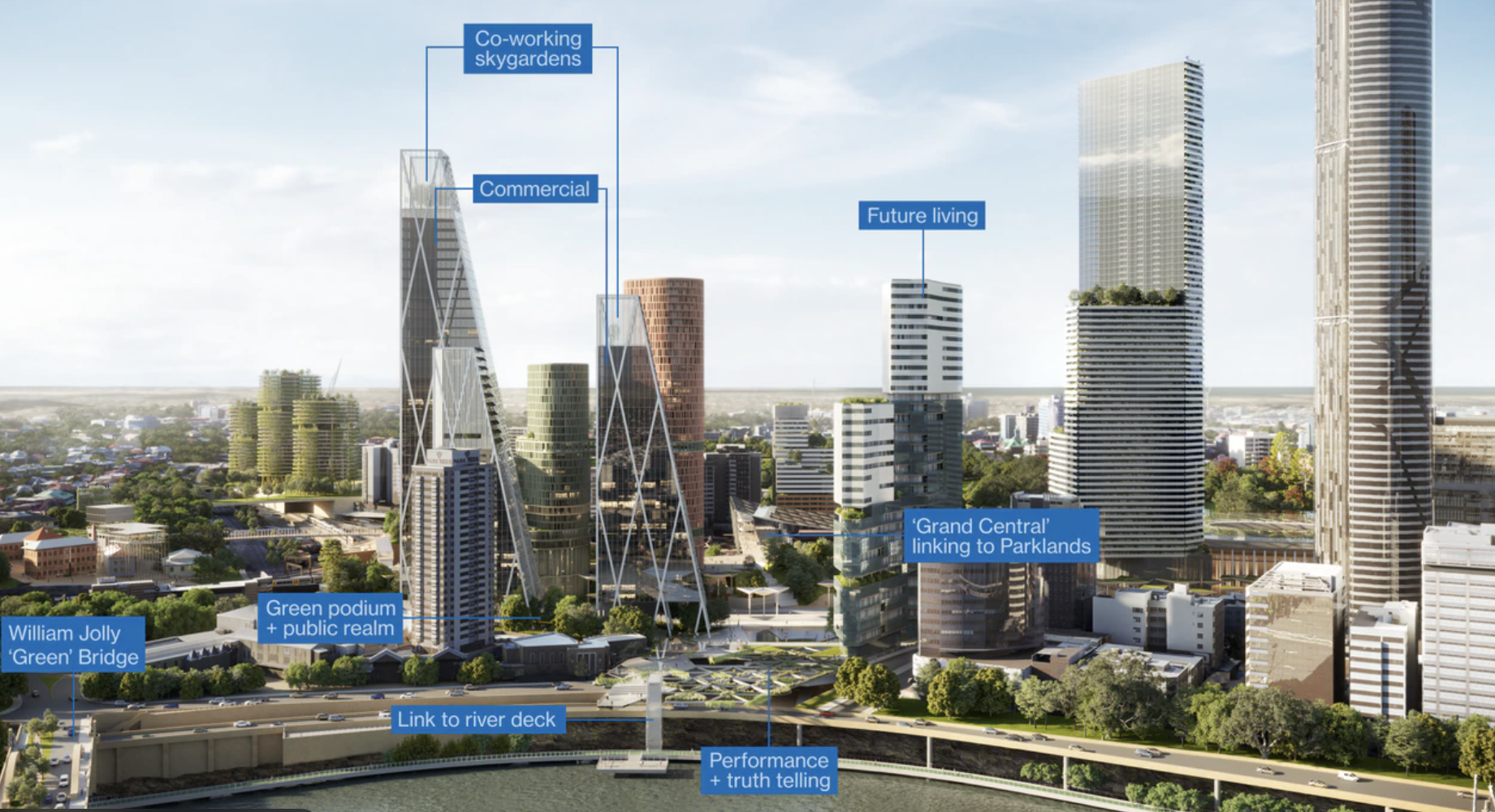
Queensland is entering a decade of sustained growth, driven by population increases, housing demand, transport investment and major infrastructure programs – including preparations for the Brisbane 2032 Olympic and Paralympic Games. For tradies and construction workers, this growth presents more than just job availability; it creates clear career progression opportunities for those who are prepared to upskill and step into higher-responsibility roles.
As projects increase in size, complexity and compliance requirements, the construction industry is placing greater value on formal qualifications, leadership capability and regulatory readiness. Understanding the right progression pathway is key to accessing higher pay, longer-term work and bigger contracts.
Queensland’s Construction Growth: Why Progression Matters
Large-scale construction and infrastructure projects differ significantly from residential or small commercial work. Government-funded and Tier 1/Tier 2 projects typically require:
-
- Qualified supervision
-
- Documented safety systems
-
- Structured project delivery
-
- Licensed and compliant contractors
This creates a natural divide between workers who remain on the tools indefinitely and those who progress into supervisory, management or contracting roles. The good news is that Queensland’s growth pipeline makes this progression both achievable and commercially worthwhile.
A Practical Career Progression Pathway
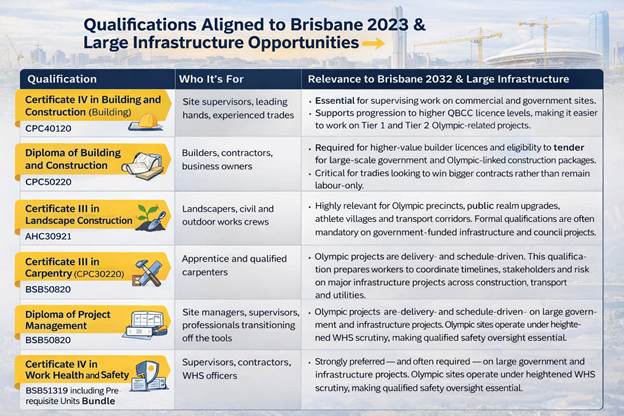
Stage 1: Trade Qualification – Building the Foundation
Who this stage suits:
-
- Apprentices
-
- Early-career trades
-
- Workers entering construction
Typical qualifications:
-
- Certificate III in Carpentry
Outcome:
This stage establishes core trade competence and site experience. A Certificate III is the baseline requirement for working on most commercial construction sites and is essential before progressing into leadership or licensing pathways.
Stage 2: Site Leadership – Stepping Into Responsibility
Who this stage suits:
-
- Experienced tradies
-
- Leading hands
-
- Workers mentoring others on site
Typical qualification:
Outcome:
This qualification supports the transition from worker to supervisor. It builds skills in site coordination, interpreting plans, managing subcontractors and meeting safety and compliance requirements – all critical on larger Queensland infrastructure and commercial projects.
Stage 3: Contractor Capability – Accessing Bigger Projects
Who this stage suits:
-
- Builders
-
- Sole traders growing their business
-
- Contractors targeting government or Tier 2 work
Typical qualification:
Outcome:
The diploma supports higher-level contractor responsibilities and is commonly linked to eligibility for larger QBCC licence classes. This stage opens the door to bidding on higher-value projects rather than relying solely on hourly labour.
Stage 4: Project Delivery – Moving Off the Tools
Who this stage suits:
-
- Site managers
-
- Supervisors
-
- Construction professionals seeking longevity
Typical qualification:
Outcome:
Queensland’s infrastructure boom has created strong demand for professionals who can manage timelines, budgets, stakeholders and risk. This qualification supports career pathways into project coordination and management roles across construction, transport, utilities and public works.
Stage 5: Safety and Compliance Leadership – A High-Demand Specialisation
Who this stage suits:
-
- Supervisors
-
- Safety representatives
-
- Workers seeking niche expertise
Typical qualifications:
Outcome:
Safety and compliance are central to government and large infrastructure projects. These qualifications enable workers to move into WHS advisory and management roles, which are in high demand and often offer strong long-term career stability.
Why Acting Early Matters
Queensland’s construction pipeline is not a short-term surge – it is a multi-year growth cycle. As demand increases, so does competition for:
-
- Supervisory roles
-
- Licensed contractors
-
- Compliance-ready workers
Those who invest early in qualifications and capability development are better positioned to:
-
- Command higher pay rates
-
- Secure longer project engagements
-
- Reduce reliance on physically demanding work
-
- Build sustainable careers beyond peak construction years
A Long-Term View of Success
For tradies and construction workers, career progression is no longer about leaving the industry – it’s about evolving within it. Queensland’s growth environment rewards workers who combine hands-on experience with formal qualifications, leadership skills and compliance knowledge.
Whether the goal is to supervise, manage projects, run a contracting business or specialise in safety, clear and structured pathways exist. The strongest outcomes will come to those who recognise that the next decade of construction work will favour qualified, capable and future-ready professionals